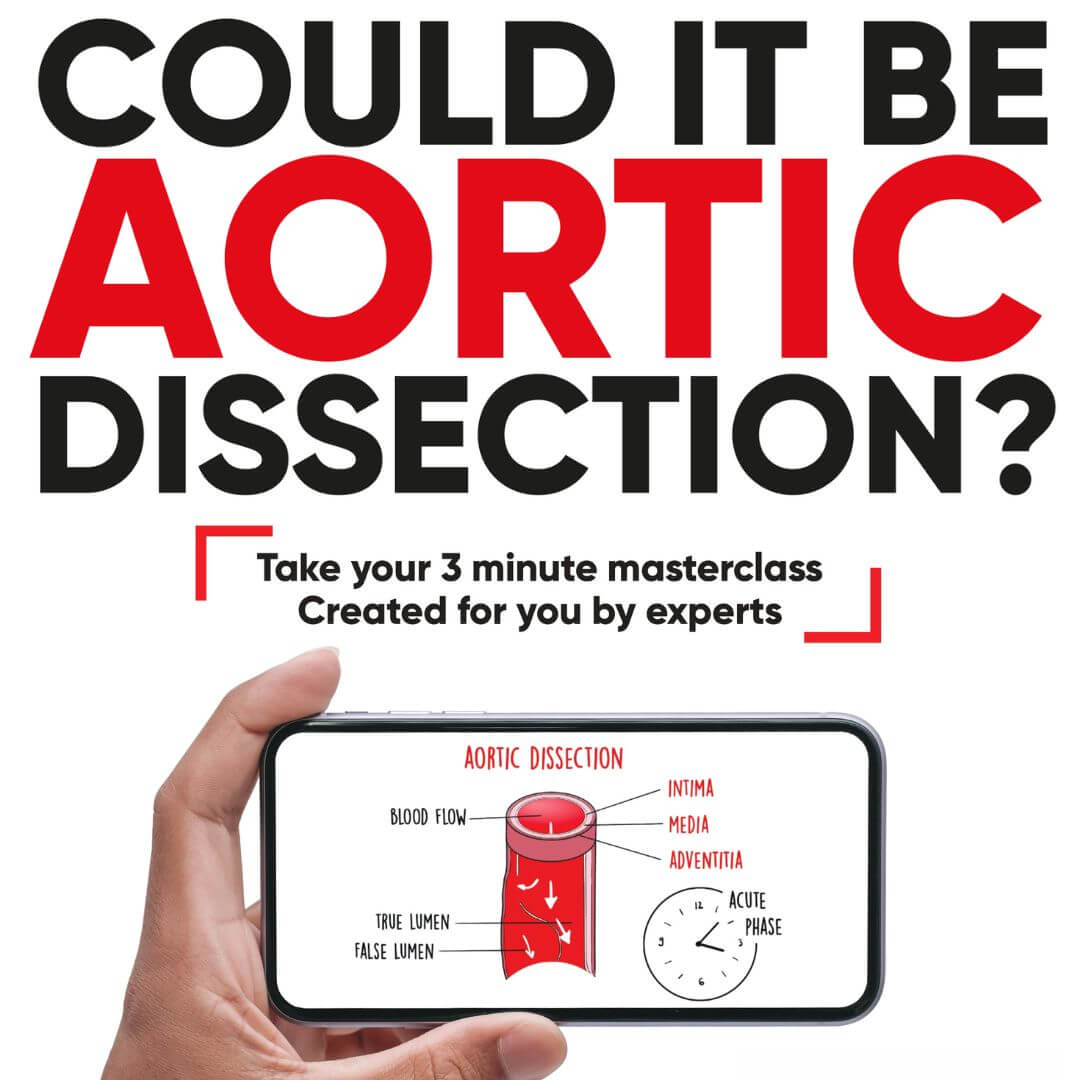
The charity, in partnership with the North East and Yorkshire Specialised Cardiac Network, hosted Complex Chest Pain Diagnosis and Early Management for Clinicians, a CPD-accredited event aimed at improving outcomes for patients presenting with serious chest pain in emergency settings.
Supported by NHS England, the event brought together clinicians to explore the challenges of diagnosing life-threatening conditions such as aortic dissection, pulmonary embolism and spontaneous coronary artery dissection. Expert speakers in emergency medicine, cardiology, radiology and surgery led sessions focused on improving clinical assessment, reducing diagnostic error and accelerating access to specialist care.
The programme combined case studies, simulation and lived experience to highlight both clinical learning and the human impact of delayed diagnosis.
ECG Insights: “To PE or not to PE, that’s the question!”
Dr Hesham Ibrahim, Consultant in Emergency Medicine and founder of the Emergency Physician’s ECG Course, delivered an energetic and thought-provoking session exploring the role of ECGs in the diagnosis of pulmonary embolism (PE). His talk, framed around a real-life case, highlighted the diagnostic challenges clinicians face when interpreting ECGs in patients with undifferentiated chest pain.
Dr Ibrahim guided the audience through the clinical reasoning process he followed during the case of an 88-year-old woman presenting with syncope and chest discomfort. Her ECG showed findings more typically associated with myocardial infarction. Despite a strong clinical suspicion of PE, the ECG pattern raised the possibility of a STEMI, forcing a high-stakes decision between urgent transfer to a cardiac centre or local admission.
Dr Ibrahim highlighted the principle of risk-based decision-making: when in doubt, choose the option that offers the patient the most comprehensive treatment. In this case, the safer pathway was to assume STEMI and transfer the patient, though the final diagnosis was a submassive PE. His presentation explored several key ECG patterns that may suggest PE but are often mistaken for acute coronary syndrome.
He also presented a series of cases from clinical practice where PE mimicked STEMI, highlighting the importance of recognising these patterns, yet one rarely discussed in medical training.
Dr Ibrahim encouraged clinicians to approach ECGs not just with pattern recognition, but with a mindset of balancing clinical context, patient safety, and the consequences of diagnostic error. Familiarity with these subtle but important differences can significantly improve clinical outcomes.

Walking the South West Coast Path
Martin Hilton, brought a powerful and deeply personal perspective to the day. He shared the story of his acute aortic dissection in March 2020, diagnosed just days before the first COVID-19 lockdown. His story highlighted the importance of quick diagnosis, rapid transfer and expert surgical care.
Martin had no prior warning signs. He had been an exceptionally fit individual, having recently completed an Ironman triathlon. He experienced a sudden but not overwhelming sensation in his chest during a short run, which he initially dismissed. Paramedics arrived swiftly and, through a sequence of investigations was diagnosed with a type A aortic dissection. The clarity and efficiency of the diagnosis and treatment pathway ultimately saved his life.
He described the shock of hearing the words “it’s not a heart attack”, a phrase that brought home the seriousness of his condition. After surgery, Martin received care from multiple teams, including cardiac rehabilitation services, which helped rebuild both his physical strength and his confidence. He spoke candidly about the early fears of fragility and his concern about pushing his body again. Support from clinicians and structured rehabilitation enabled him to regain trust in his recovery.
Mental health was also touched upon. Martin emphasised his gratitude and relief at surviving, while recognising that others face significant psychological impacts, including post-traumatic stress. He highlighted the profound effect the experience had on his wife and children, and the wider emotional burden on families.
Since his recovery, Martin has returned to challenging himself. He walked the entire 630 miles of the South West Coast Path, raising over £8,000 for the charity. He has also completed another Ironman triathlon. Martin shows that life after aortic dissection can be active, purposeful, and inspiring.
Spontaneous Coronary Artery Dissection
Professor David Adlam, Consultant Cardiologist at Leicester, delivered a thorough session on spontaneous coronary artery dissection (SCAD). His presentation addressed a condition that remains under-recognised but is a significant cause of myocardial infarction, particularly in women under 50.
SCAD is not caused by atherosclerosis and occurs when a bruise forms within the wall of a coronary artery. This intramural haematoma compresses the artery from the outside, reducing or blocking blood flow. It is a distinct disease with different causes, patient demographics and management pathways compared to conventional coronary artery disease.
The condition disproportionately affects younger women, often without typical cardiovascular risk factors. A significant number of cases occur in the peripartum period. Professor Adlam highlighted the importance of recognising that SCAD patients may be misdiagnosed or dismissed, particularly when presenting without classic symptoms.
Treatment differs significantly from traditional myocardial infarction management. Most SCAD cases are managed conservatively. The majority of affected arteries heal over time, and stenting can lead to complications, so surgery is reserved for exceptional cases. The long-term outlook is generally good, although recurrence occurs in 10% of patients over 5 to 10 years. Many patients also experience recurrent non-ischaemic chest pain, which can persist for months or years. All clinicians involved in chest pain pathways must be aware of SCAD and the specific needs of this patient group.
The Challenge of Diagnosing Acute Aortic Dissection
Graham Cooper delivered an in-depth session on the diagnostic challenges surrounding acute aortic dissection (AAD). He began by framing the scale of the issue: around 4,000 people suffer an aortic dissection each year in the UK, with half dying before reaching hospital. Of those who do reach hospital, only two-thirds are correctly diagnosed in time to receive life-saving treatment.
He emphasised how these complex and variable presentations often lead to misdiagnosis. Some patients experience classical tearing chest pain, but others may present with abdominal pain, collapse, or signs mimicking stroke or heart attack. Symptoms can settle as the dissection stabilises, leading patients to downplay their condition and clinicians to underestimate its severity.
He challenged several common misconceptions: that aortic dissection is rare, that patients are always critically unwell on presentation, and that differences in blood pressure between arms are a reliable diagnostic sign. In reality, many patients appear well despite being critically ill, and most do not show the textbook signs.
He discussed the Aortic Dissection Detection Risk Score (ADD-RS), a clinical decision tool that, when combined with D-dimer testing, could help emergency departments identify patients requiring urgent CT imaging. He also spoke about emerging research into improved biomarkers and artificial intelligence tools to support earlier diagnosis. Stressing the need for ongoing education, clinical awareness and a culture of early consideration to reduce diagnostic delay and improve survival.
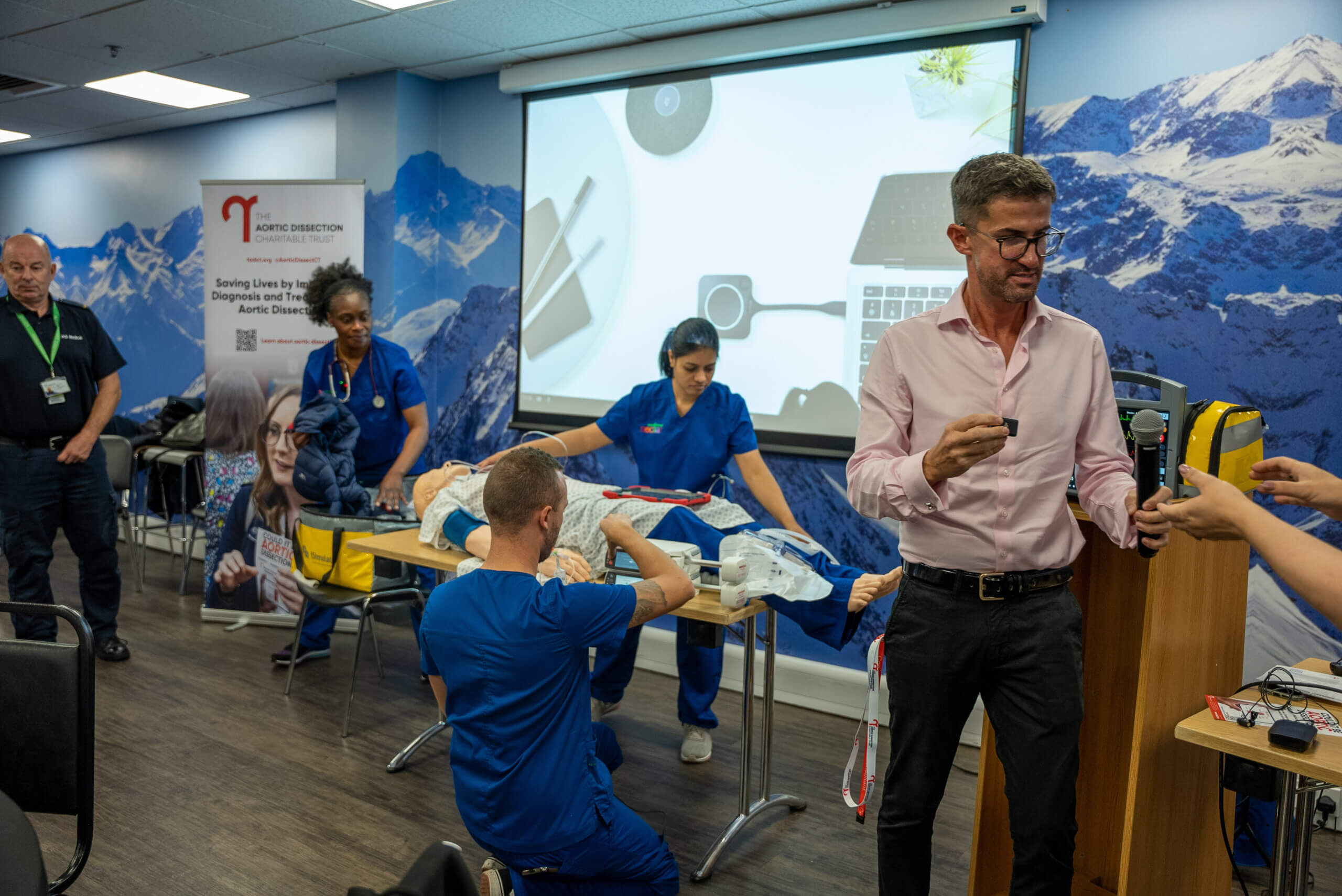
Transfer Considerations in Aortic Dissection: Live Simulation
The day featured a dynamic live simulation led by Dr Tom Payne-Doris, Consultant in Intensive Care Medicine and Lead Consultant for NECTAR, the North East and North Cumbria Transport and Retrieval service. He was joined by ICM registrars, nursing and retrieval team members, and Paul, the team’s driver manager. Together, they demonstrated the complex decision-making and teamwork required when preparing and transferring a patient with an acute type A aortic dissection.
The scenario centred on a simulated patient, a 56-year-old man with Marfan syndrome who presented with a tearing chest pain and was confirmed to have a type A dissection. Cardiothoracic surgery had been accepted, and the focus of the session was on pre-transfer stabilisation and preparation for safe transfer.
Dr Payne-Doris addressed the balance between urgency and safety. While timely surgery is crucial, mortality increases by 1–2% per hour of delay, patients must be adequately stabilised before transfer. A rushed transfer with inadequate control of pain or blood pressure can result in deterioration on route, reducing the chance of survival.
A practical transfer checklist was shared, covering equipment, monitoring, documentation, and communication. The importance of involving the patient’s family before transfer was also emphasised, particularly given the risk of sudden deterioration during transit.
This session offered a rare and invaluable opportunity for clinicians to witness and reflect on the realities of high-acuity transfers for patients with aortic dissection. It combined expert instruction with real-world insight, reinforcing the need for clear protocols and collaborative working.
The Radiologist’s Perspective
Dr Georgios Antoniades, Consultant Radiologist at Hull University Teaching Hospitals and Vice President of the British Society of Emergency Radiology, delivered a compelling session on the crucial role of radiology in the diagnosis of acute aortic dissection. Through a wide-ranging and highly practical presentation, he explored both the capabilities and limitations of imaging, drawing on a wealth of clinical experience and detailed case studies.
Dr Antoniades began by highlighting the importance of early diagnosis and the need for a high index of suspicion in patients presenting with chest pain. He explained that while CT is the cornerstone of diagnosis, its value depends on appropriate technique and clear clinical communication. A triple-phase CT protocol, non-contrast, arterial, and delayed imaging, was outlined as essential for detecting not only classic dissection but also subtle variants such as intramural haematomas and penetrating ulcers.
The session featured examples of diagnostic challenges, including cases where dissections were initially missed due to subtle signs or atypical presentations. Dr Antoniades also discussed the risk of hemopericardium being overlooked when contrast-enhanced scans mask the radiological density of blood. He stressed the need for meticulous image review and a broad differential diagnosis, particularly when symptoms deviate from textbook presentations.
In the second half of the presentation, he showcased rarer causes of chest pain identified on CT, such as coronary aneurysms, cardiac tumours, and septic emboli. These illustrated the breadth of conditions that can mimic or coexist with aortic pathology. Throughout, he emphasised the role of radiology as both a diagnostic and collaborative tool, supporting emergency and cardiology teams in rapid decision-making.
From Symptom to Management
Dr Ben Davison, Interventional Cardiologist and former Clinical Lead for the Hull and North Yorkshire Cardiovascular Network, delivered a reflective talk about the journey from patient symptoms to definitive diagnosis in suspected acute coronary syndromes (ACS). Rather than rehashing standard ACS pathways, his focus was on how clinicians can bridge the gap between presentation and diagnosis, and how cognitive biases and system delays can interfere with optimal care.
Dr Davison opened with a personal story from early in his training, when a patient discharged under a “noncardiac” chest pain diagnosis later died from an unrecognised aortic dissection. That experience left a lasting impression on him: the importance of keeping a broad differential before anchoring on one diagnosis. Over his career, he has encountered many non‑typical presentations, some with syncope, others with neurological symptoms, highlighting that ACS, aortic dissection, and pulmonary embolism can overlap in presentation.
He illustrated this with a striking clinical case. A man aged 65 presented with central chest pain was taken straight to the catheter lab. The angiogram showed no significant coronary disease, however, a later D‑dimer and CT scan revealed a profound type A aortic dissection extending from the root to the iliacs. On review, subtle signs of a false lumen had been visible on the left ventriculogram, but they were not appreciated. The delay from initial presentation to definitive diagnosis was more than ten hours.
From that case, Dr Davison drew important lessons about the interplay between clinical reasoning, human factors, and diagnostic pathways. He introduced dual‑process theory:
Type 1 Thinking (fast, intuitive, pattern-based) is essential in emergency settings, but is prone to experiential shortcuts, anchoring, and confirmation bias.
Type 2 Thinking (deliberative, analytical) offers more robust reasoning but is harder to deploy under pressure. He cautioned that even skilled clinicians can fall into biases such as:
- Availability bias: prematurely assuming common presentations (e.g. STEMI) over rarer but serious ones like dissection
- Anchoring bias: staying fixed on initial impressions despite subsequent data
- Confirmation bias: seeking evidence that supports one’s preferred diagnosis and overlooking opposing clues
- Search satisficing: stopping diagnostic investigation once one plausible diagnosis is found
To counter these, he urged clinicians to cultivate metacognition (thinking about how we think), use checklists or broad diagnostic prompts (“What else could it be?”), and avoid overly disease‑specific pathways that shortcut the differential.
Loss and the Lessons from David’s Experience
Sandra bravely shared the deeply personal and moving story of her partner David, who tragically died following a misdiagnosed aortic dissection. Her account offered a powerful reminder of the human consequences behind clinical decisions and the importance of why early recognition of this condition is so vital.
David’s symptoms began as sudden and severe abdominal pain, accompanied by lower back pain and an overwhelming sense of illness. Sandra recalled how unwell he appeared, pale and with no energy. Although the pain later eased slightly, it remained intense. David had never previously visited his GP and was reluctant to seek help, but by the next morning, feeling no better and unable to eat, he agreed to go to hospital.
At A&E, David saw a triage nurse and was later reviewed by a GP in the emergency department. He was diagnosed with gastritis and advised to take Gaviscon. His medical notes described his symptoms as “mild” and made only a brief reference to his presentation. Sandra recounted how this was in stark contrast to what David had actually experienced and to what she had seen herself.
Over the following days, David remained in bed, increasingly fatigued and breathless. Six days later, he returned to hospital with worsening symptoms and was diagnosed with a type A aortic dissection. He underwent emergency surgery, but the dissection was extensive, and despite the team’s efforts, David died just over a week later.
Her decision to speak at the event, and to support the work of the charity, stemmed from a determination that David’s story should help others. If sharing it can prompt even one healthcare professional to pause, to think more broadly, and to ask more questions, then it may save a life.
Sandra’s account was a sobering reminder that patients do not come to A&E lightly. For many, it is a last resort. Her courage in sharing this experience brought the day’s discussions into sharp focus and served as a call to action for all in the room.
A Human Factors-Informed Quality Improvement Project
Dr Austin Smithies, Consultant in Emergency Medicine at Hull, presented an in-depth review of a three-year quality improvement initiative aimed at reducing missed diagnoses of acute aortic dissection. The project, driven by a systems-based approach and supported by the charity, drew heavily on lived experiences from bereaved families.
With insight from the DAShED study, which revealed that even under research conditions clinicians often missed or delayed dissection diagnoses, Dr Smithies described how the project moved beyond traditional audit methods. Data was drawn from multiple sources, including electronic records, incident reports, and coroners’ data, to identify all presentations of acute aortic syndromes over several years. Misdiagnoses were classified and examined for common themes.
The initiative incorporated principles of human factors science, focusing on performance variability and systems thinking. A cornerstone of the project was establishing a learning culture, moving away from blame and toward collective accountability. Dr Smithies described how mortality and morbidity meetings were redesigned to include cases with positive outcomes, enabling the team to understand what excellence looked like in the context of a complex, pressured environment.
The project also fostered cross-disciplinary collaboration, involving radiologists, surgeons, and cardiology teams from the outset. Practical steps included a visible clinical pathway for dissection diagnosis, early senior review policies, and a significant increase in CTA aortogram usage. In parallel, regular simulation training was introduced to reinforce both technical and non-technical skills.
The results were significant. Time from initial clinician assessment to scan request fell from 114 minutes to 32 minutes. The number of diagnoses rose significantly, likely reflecting more accurate detection rather than increased incidence. Ongoing education, repeated messaging, and close collaboration with the charity have helped embed a new mindset.
Events like this, where clinical experts share their experiences and insights, are vital to driving real change. By bridging evidence, practice, and lived experience, they help improve diagnosis, reduce harm, and ultimately save lives.