On Aortic Dissection Awareness Day 2026, the Aortic Dissection Charitable Trust announced that South Tees Hospitals NHS Foundation Trust will receive new funding for a dedicated Aortic Advanced Practitioner.
Based at James Cook University Hospital, the role will support people with thoracic aortic disease across a large geographical area including Teesside, North Yorkshire, Durham and Cumbria.
The funding represents another important step in the charity’s work to improve long-term care following aortic dissection. Having a dedicated Advanced Practitioner will help coordinate care, strengthen follow-up and surveillance, support patients and families and provide a consistent point of specialist expertise throughout what can be a lifelong journey.
For the team at South Tees, the award also provides the opportunity to turn work already underway into a sustainable service.
Responding to a Growing Aortic Service
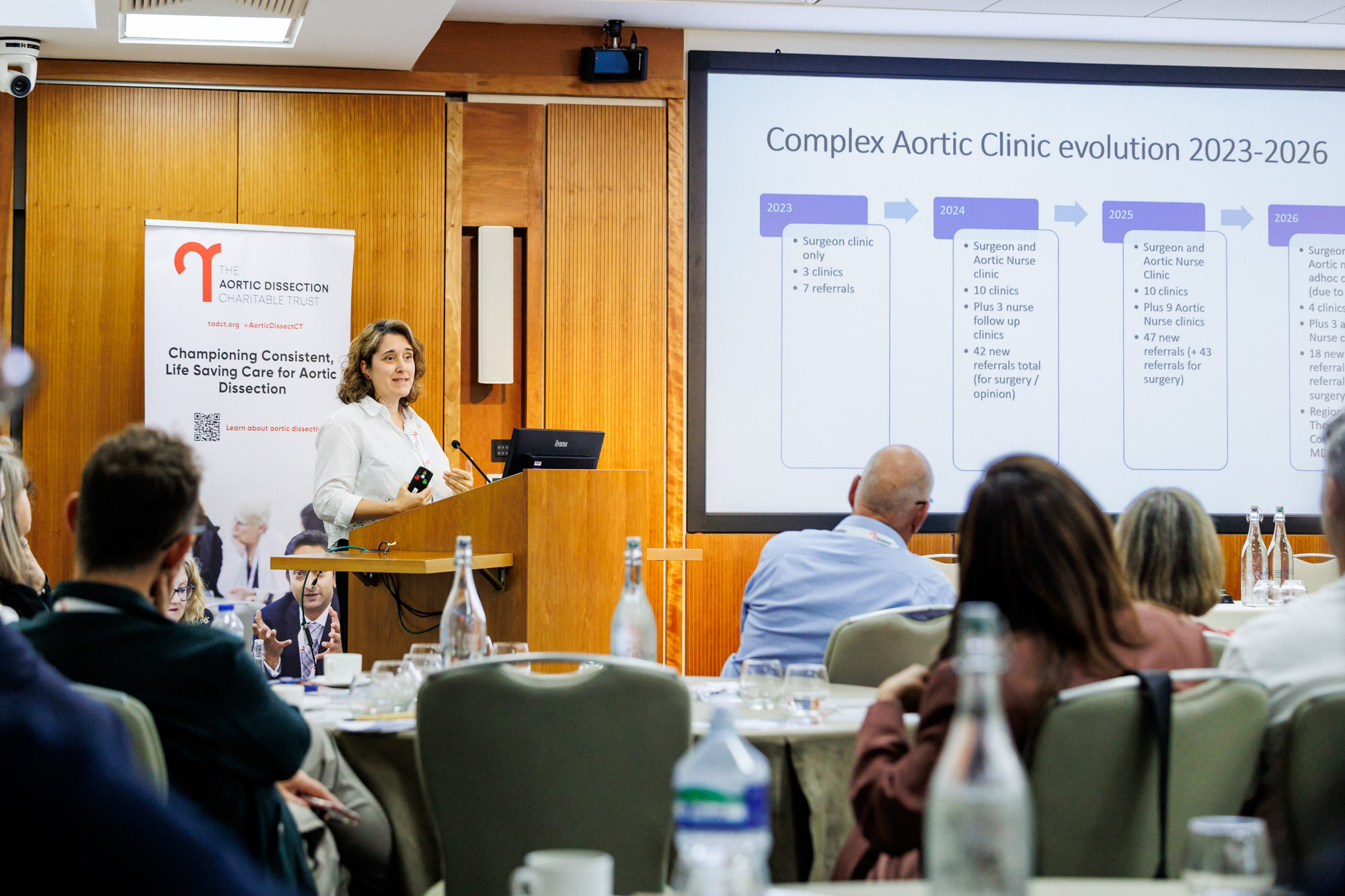
Cristina Ruiz Segria, Advanced Surgical Care Practitioner in Cardiothoracics at James Cook University Hospital, led the successful application. Speaking at the charity’s announcement event, Cristina described how thoracic aortic care has evolved significantly. Advances in surgery, genetics and understanding of when patients should be considered for intervention have changed the way aortic disease is managed. At the same time, due to an ageing population, the number and complexity of major aortic cases being seen by the South Tees team have increased.
Cristina highlighted some of the difficulties that can arise when dedicated aortic services are not in place. Follow-up can become fragmented between different specialties and referring hospitals, imaging may not always be coordinated, access to genetics can take time, and patients may also need psychological and social support as they adjust to living with aortic disease. This is where specialist nursing can make such a difference.
Building the Service at South Tees
The South Tees team has recognised that patients need more coordinated care and started developing their own local service. They established a new referral system, developed nurse-led clinics for patients following surgery and those with smaller aneurysms, and reviewed patients who had experienced an aortic dissection during the previous four years to help ensure appropriate follow-up was in place.
The team has also developed surveillance arrangements, updated its local dissection policy, strengthened links with vascular and other specialist teams, created new pathways and established a monthly multidisciplinary team meeting.
But building a service through the commitment and goodwill of existing staff has limitations. When clinical pressures increase or team members are unavailable, staff can be pulled back into other areas of care. Clinics and follow-up that depend on people finding additional time become difficult to sustain.
Cristina explained that this was one of the central reasons South Tees applied for the TADCT funding. The team wanted to move away from providing elements of the service on an ad hoc basis and establish something that could become a sustainable part of aortic care at the hospital.
What an Aortic Advanced Practitioner Means for Patients
The value of these roles is already becoming visible elsewhere. In 2025, the Aortic Dissection Charitable Trust announced its first funding for specialist Aortic Advanced Practitioner roles at Liverpool Heart and Chest Hospital and Imperial College Healthcare NHS Trust.
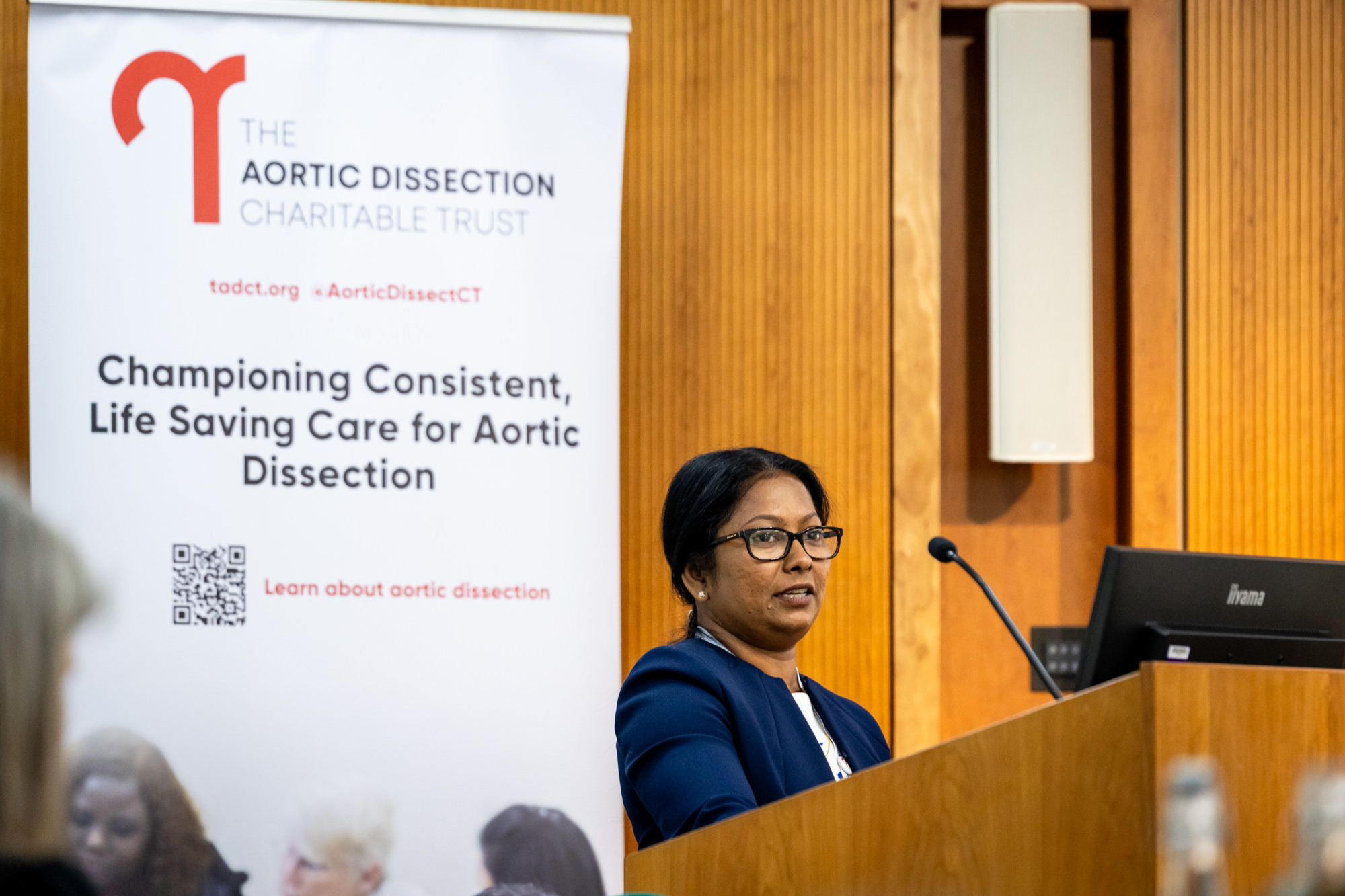
One of those appointments was Reeja Shibu, Aortic Dissection Specialist Nurse at Liverpool Heart and Chest Hospital. Reeja shared what the role now looks like in practice and just how broad specialist aortic nursing can be. It stretches from the hospital ward and multidisciplinary team to outpatient clinics and the patient’s home.
Reeja works with patients and families to help them understand their diagnosis, answer questions and coordinate appropriate follow-up. She participates in ward rounds, supports referrals, helps coordinate multidisciplinary meetings, contributes to dedicated aortic dissection clinics and helps with genetic testing, education and long-term surveillance. She also helps educate ward staff about the particular needs of patients following aortic dissection, including the importance of blood pressure management.
Making Sure Patients Do Not Feel Lost
Going home after experiencing an aortic dissection can bring a new set of challenges compared to the life the patient knew before it happened. Reeja described how patients sometimes tell her that they feel lost after leaving hospital. During their admission they are surrounded by clinical teams, but once home, there are often questions about blood pressure, symptoms, exercise, lifestyle, medication and what happens next.
Part of her role is to contact patients following discharge. These calls may sometimes take only a few minutes, but they provide an opportunity to check recovery, discuss blood pressure and lifestyle changes, answer questions and remind patients that a specialist team remains there for them. On one of these follow-up calls, a patient reported increasing numbness, tingling and weakness. She was able to escalate those symptoms to the appropriate clinicians so that they could be assessed and managed. It is a practical example of why continuity matters.
Immediately following an aortic dissection or major surgery, patients and families can receive an enormous amount of information at an extremely difficult time. It is understandable that they may not remember or fully absorb everything they are told. Having a specialist professional who can return to those conversations later can help people better understand their condition, their surveillance and the steps they can take to manage their health.
Funding the Role Is Only the Beginning
The experiences shared by Cristina and Reeja also show why the Aortic Dissection Charitable Trust is investing in people, as well as education, research and policy change. Our ambition is to help that specialist expertise develop further across the UK and Ireland.
TADCT continues to build its education and professional support for aortic nurses and Advanced Practitioners. This includes our annual face-to-face Aortic Nurses Symposium, specialist education webinars and our Specialist Aortic Advanced Practitioner Community of Practice.
These opportunities allow professionals working across different centres to learn from one another, share experiences and discuss the challenges involved in developing specialist aortic services. This is particularly important for someone establishing a new role. Cristina acknowledged the growing community of aortic nurses around the UK and the contribution that the charity’s funding, symposiums and professional support have made to the development of these roles.
Made Possible by Our Fundraising Community
The funding for South Tees has been made possible by the extraordinary community that stands behind the Aortic Dissection Charitable Trust.
Patients, families and individual fundraisers take on challenges, organise events, remember loved ones and ask their communities to support our work. Corporate donors and partners also provide important financial support that allows the charity to invest in projects capable of creating lasting improvements in care.
When someone raises money for the charity, they are helping us move from identifying gaps in care to doing something practical about them. Funding an Advanced Practitioner creates capacity within an NHS service and supporting their education helps develop expertise. We are enormously grateful to our individual fundraisers and corporate donors who make this work possible.

Growing a National Network
South Tees is the recipient of the charity’s Aortic Advanced Practitioner funding award for 2026. It follows the first awards made in 2025 and represents the next stage in a longer-term programme to strengthen specialist aortic nursing, with the application for the next round of funding opening again in 2027.
For South Tees, the next stage will be appointing its new Aortic Advanced Practitioner and continuing to develop a service capable of meeting the volume and complexity of aortic disease across the region. For patients and families across Teesside, North Yorkshire, Durham, Sunderland and Cumbria, this means specialist aortic care can become more accessible.