The Aortic Dissection Charitable Trust was proud to once again support and sponsor Liverpool Aortic Week, a dual event bringing together world-leading researchers, surgeons, healthcare professionals, patients and families.
The week began with Aorta: Structure to Rupture, a meeting focused on the latest developments in the biochemistry and biomechanics of thoracic aortic aneurysms, alongside advances in vascular bioengineering. The programme included presentations from Dr Riaz Akhtar and Dr Jill Madine, as well as updates from AortaBank and the Aortic Dissection Priority Setting Partnership.
The Charity delivered the patient perspective session, supported by one of our patient volunteers. Sharing lived experience remains an important part of these events. It helps ensure that research and clinical developments remain focused on the needs of patients and families.
The second event, the Liverpool Aortic Symposium, brought together many of the world’s leading figures in aortic surgery and research. This year’s symposium placed a particular focus on syndromic diseases of the aorta, exploring their genetic causes and clinical implications.
Bringing Together World-Leading Expertise
Among the distinguished faculty were Professor Hal Dietz and Dr Bart Loeys, whose work led to the discovery of Loeys-Dietz syndrome more than 20 years ago. Delegates also heard from internationally respected aortic surgeons Professor John Elefteriades, Professor Duke Cameron and Dr Dianna Milewicz who leads the John Ritter Research Program.
A dedicated patient and family session on Loeys-Dietz syndrome provided a valuable opportunity for those affected by the condition to ask questions directly to leading experts. These sessions are often one of the most important parts of the programme, helping families access trusted information and feel connected to the wider aortic community.
The symposium also featured presentations from:
- John Pepper – Reinforce, Don’t Replace: The PEARS Philosophy
- Duke Cameron – Marfan Syndrome: New Insights on an Old Disease
- John Elefteriades – BAV Aortopathy: The Ever-Changing Goalpost
- Christoph Nienaber – One Aorta, One Team: Hybrid Solutions for Multi-Segment Aortic Disease
- Ahmed Othman – A Pan-Aortic Strategy for Syndromic Disease: The Liverpool Experience
Partnerships That Drive Progress
The importance of events such as Liverpool Aortic Week extends beyond the presentations themselves. They create opportunities to build partnerships, strengthen professional networks and encourage collaboration between clinicians, researchers, charities and patient groups. These relationships are essential for driving progress in treatment and long-term care.
The Charity was also delighted to see our trustee, Catherine, recognised during the faculty dinner for her outstanding contribution to supporting the aortic dissection community. The recognition reflected many years of dedication to improving support and awareness for patients and families.

Acute Aortic Dissection Toolkit Update
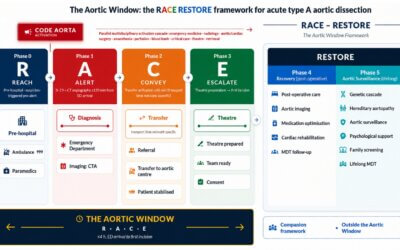
Graham Cooper presented the latest progress on the rollout of the Acute Aortic Dissection Toolkit across England. The update highlighted significant progress in the development of regional networks and pathways designed to improve the transfer and treatment of patients experiencing acute aortic dissection.
Several key drivers are helping to move implementation forward. Strong clinical leadership and engagement have been central to success. The introduction of single points of contact across regions is helping to streamline communication. Regional education programmes continue to raise awareness among healthcare professionals, while improved network building is strengthening collaboration between centres. Advances in image sharing are also helping teams make faster decisions and support more rapid transfer and treatment of patients.
However, challenges remain. Data collection continues to rely heavily on busy clinical teams, which can make consistent reporting difficult. Some regions have yet to fully implement rota systems, creating variation in service provision. Geographical challenges also affect access to specialist care in certain areas. In addition, there remains limited capacity to manage all type B aortic dissection cases within designated aortic centres.
The Aortic Dissection Charitable Trust remains committed to ensuring that the patient perspective is central to these important conversations. By bringing together scientific discovery, clinical expertise and lived experience, we can help drive improvements in diagnosis, survival and quality of life for everyone affected by aortic dissection.